Vietnamese durian: varieties, season and nutrition
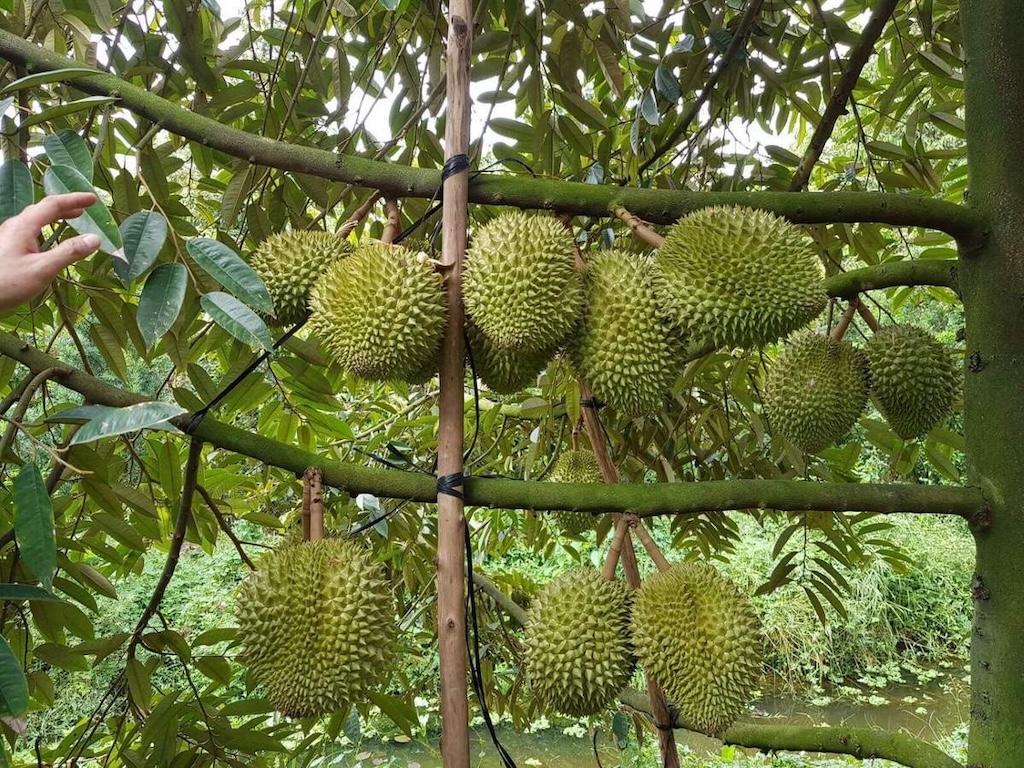
Crowned the king of fruits, durian wins people over with its golden, buttery flesh and a powerful, unmistakable aroma. Vietnam is among the richest durian lands of all, growing many prized varieties from the Mekong Delta up to the Central Highlands.
1. Durian varieties and growing regions
As for regions, Cai Mon in Ben Tre and the western provinces are long famous, while the Central Highlands — Dak Lak (Krong Pak) and Lam Dong (Da Huoai) — ripen later, giving fuller-flavoured fruit thanks to the day-night temperature swing.
Each durian variety has its own flesh colour, richness and flavour. Some of the most common in Vietnam include:
- Ri6: a much-loved local variety with deep-yellow flesh, flat seeds and a pronounced sweet richness — widespread across the Mekong Delta.
- Monthong (a Thai variety, also called Dona): thick, dry-textured flesh, moderately sweet with little fibre, and a good keeper that the market favours.
- Musang King: a premium Malaysian variety with turmeric-yellow flesh, a light bitterness giving way to sweetness, and a deep creaminess.
- Chuong Bo and khổ qua xanh: traditional varieties with soft flesh and a bold, familiar flavour dear to delta locals.
2. The durian season
In the Mekong Delta the main durian season runs from around April to July. The Central Highlands ripen later, roughly July to October, so together the country enjoys durian across much of the second half of the year.
With regions overlapping, you can find fresh durian almost any time; still, each region delivers its finest fruit and best prices during its own peak.
3. Nutrition and benefits
Durian is far more energy-dense and nutrient-rich than most fruit, making it both delicious and quick to fill you up:
- Provides substantial energy from natural carbohydrates and fats.
- Rich in vitamin C and several B vitamins that help support the body.
- Contains potassium and fibre that can help support digestion and balance.
Because it is so calorie-dense, enjoy durian in moderation; anyone watching blood sugar or weight should keep to small portions and avoid eating it late at night.
4. How to choose good fruit
- Choose a mature fruit with plump, broad-based spikes, a firm heft and evenly filled segments.
- Smell the stem and base: a strong, sweet aroma means ripe; almost no smell means underripe.
- Tap for a low, slightly hollow thud — a sign the flesh has loosened from the shell and softened.
- A fresh, slightly moist and firm stem shows recent harvest rather than early picking and forced ripening.
5. Storing
- Keep a whole durian in a cool, shaded spot and use it within two or three days.
- Separated flesh keeps best sealed segment by segment and frozen; thaw naturally to preserve the creamy taste.
- If refrigerating, wrap it very tightly, as the durian aroma readily transfers to other foods.
6. Ways to enjoy it
It is finest eaten fresh at peak ripeness, savoured with a little hot tea to balance the rich sweetness. Beyond that, durian is a wonderful base for many desserts and drinks.
- Blend it with milk and ice into a rich, silky durian smoothie.
- Cook it into durian sticky rice, ice cream, crepes or a durian chè.
- Mash it with young coconut and coconut cream for an indulgent dessert.
Open the segments by cutting along the seam that runs between the ridges of spikes; that is where the shell is thinnest and opens most easily without nicking the flesh.
From Cai Mo to Dak Lak, Farm to Door durian is selected tree-ripened region by region, season by season — so every segment reaches you with the full flavour worthy of the king of fruits.